7 Legal Ways to Get Cheap Train Tickets in India – Save Up to 50% on IRCTC Booking (2026)
Discover 7 legal and smart ways to save money on Indian Railways train tickets in 2026. From choosing the right quota and class to using concessions, these IRCTC booking hacks can cut your travel cost by up to 50 percent.

Train travel in India is already one of the most affordable ways to cover long distances. But what if you could make it even cheaper? Whether you are a student, a frequent traveller, or a family planning a trip on a budget, there are several completely legal strategies to significantly reduce your train ticket costs. Here are 7 proven ways to save money on IRCTC bookings in 2026.
1. Book General Quota Tickets 120 Days in Advance
This is the single most effective way to guarantee a confirmed ticket at the lowest possible fare. Indian Railways opens General Quota bookings exactly 120 days (4 months) before the date of journey.
Why it works: When you book early, you get a confirmed ticket at the base fare without any premium. As the journey date approaches and seats fill up, the only options left are often Tatkal (which costs 10-30 percent more) or premium trains with higher base fares.
Pro tip: Set a reminder on your phone for the exact booking date. IRCTC opens bookings at 8:00 AM for general quota. If you are booking a popular route like Delhi to Mumbai or Bangalore to Chennai, log in at 7:55 AM and be ready to book as soon as the clock hits 8.
On ConfirmYatra, you can check seat availability for any train up to 120 days ahead. Search your route, pick the train, and see which dates still have confirmed seats — then book on IRCTC immediately.
2. Choose the Right Travel Class to Maximize Value
Many passengers automatically book 3AC (Third AC) without considering whether a different class might offer better value for their specific journey. Here is a breakdown:
Sleeper Class (SL) — The best value for overnight journeys. A Delhi to Mumbai Sleeper ticket costs around 500-600 rupees, compared to 1,300-1,500 in 3AC. You get a full berth to sleep on, and modern sleeper coaches are reasonably comfortable.
3E (Third AC Economy) — This relatively new class offers AC travel at fares that are about 8-15 percent cheaper than regular 3AC. The only difference is slightly more berths per coach (side middle berth added). For the saving, it is a great deal.
Second Sitting (2S) — For day journeys under 6 hours, 2S is incredibly cheap. A 300 km journey can cost as little as 60-100 rupees. Use it for short intercity hops.
General Class — If you are truly on a tight budget and the journey is short (under 3 hours), the unreserved general compartment is the cheapest option. Just buy a ticket at the station counter.
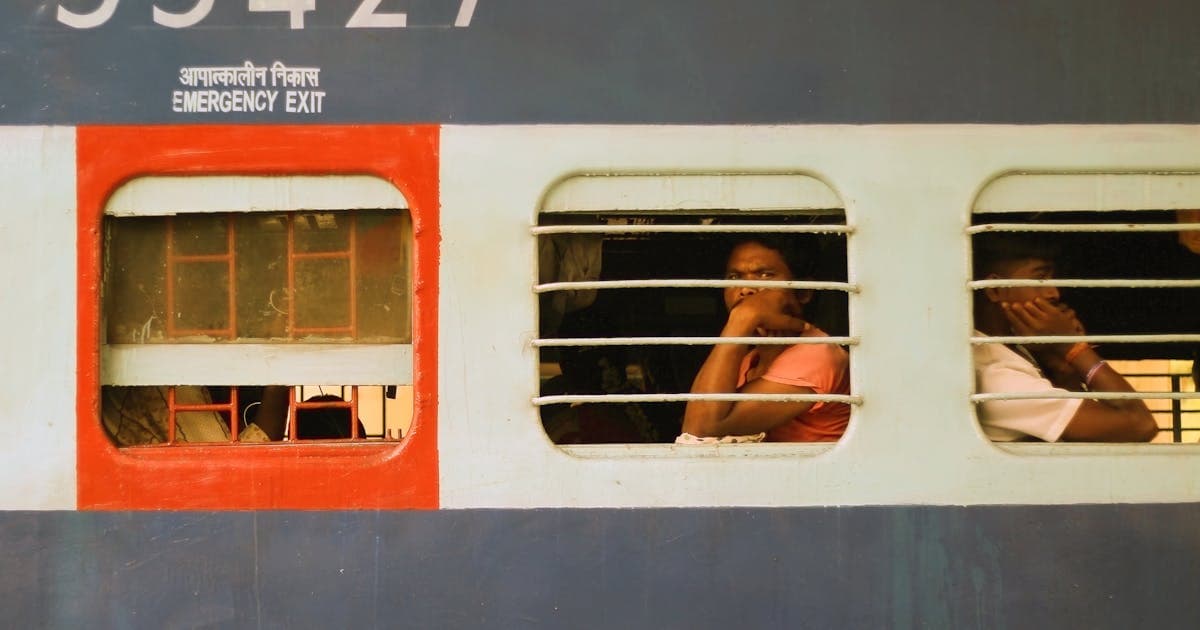
The real hack: For the same route, compare fares across different trains. A Rajdhani might charge 2,200 in 3AC, while a regular Superfast charges 1,400 for the same class on the same route. The Rajdhani includes meals, but the fare difference is often more than the food is worth.
3. Use the Suvidha and Special Train Fares Strategically
Indian Railways runs Special and Suvidha trains on busy routes, especially during festivals and holidays. Here is the insider knowledge:
Festival Special trains often have the same fare as regular trains but run as extra services. During Diwali, Holi, or summer rush, Railway adds dozens of special trains. These are often overlooked because they have unfamiliar train numbers (starting with 0 or 06).
How to find them: Search your route on ConfirmYatra on your travel date. Our results include all special trains alongside regular services. You might find a special train with plenty of seats when the regular ones are fully waitlisted.
Suvidha trains do have dynamic pricing (fares increase with demand), but if you book them early when demand is low, the base fare can be competitive.
4. Leverage Concessions and Discounts
Indian Railways offers concessions to several categories of passengers. Many eligible travellers do not claim these because they are unaware:
Senior Citizens:
- Women aged 58+ and men aged 60+ get up to 40 percent concession on basic fare
- This applies to all classes except 1AC and Executive Class on some trains
- You need to carry a valid age proof
Students:
- Students get concession of 25-50 percent on second class and sleeper class
- You need a concession certificate from your educational institution countersigned by the station master
- This must be done at the railway counter (not available online)
Disabled Persons:
- Persons with disabilities get 50-75 percent concession depending on the nature of disability
- A disability certificate from a government hospital is required
Other eligible categories:
- Press correspondents (50 percent)
- War widows (75 percent)
- Patients travelling for treatment at government hospitals
- Sports persons travelling for national/state level competitions
- Teachers (25 percent on second class during vacation)
Important: Most concessions are available only when booking at the railway counter, not on the IRCTC website. However, senior citizen concessions can be availed online by selecting the senior citizen option during booking.
5. Split Your Journey for Cheaper Fares
This is a lesser-known but very effective strategy. Indian Railways calculates fares on a distance-based slab system. Sometimes, booking two separate shorter tickets costs less than one long ticket.
Example: Delhi to Chennai (2,175 km) might cost 650 in Sleeper on a direct train. But if a train stops at Bhopal (700 km from Delhi), you could book:
- Delhi to Bhopal: 310 rupees
- Bhopal to Chennai: 385 rupees
- Total: 695 rupees — almost the same, but sometimes the split fare is genuinely lower, especially when you cross a distance slab boundary
When this really helps: On circular routes or routes where the train takes a longer geographical path than necessary. The fare is calculated on the actual distance via the route, not the straight-line distance.
Another split strategy: If a train is fully booked for the entire route, check if seats are available for intermediate segments. You might get confirmed tickets for Delhi-Nagpur and Nagpur-Chennai even when Delhi-Chennai is fully waitlisted. You stay on the same train — just with two separate tickets.
Use ConfirmYatra to check availability for different segments of your route. Our search tool shows you all intermediate stations and you can compare fares and availability.
6. Avoid Peak Travel Dates and Use Off-Peak Timing
Train fares in India are mostly fixed (unlike airlines), but your chances of getting a confirmed ticket — and avoiding expensive Tatkal charges — are much higher on off-peak dates.
Dates to avoid:
- Friday and Sunday evenings (weekend rush)
- The week before and after Diwali, Holi, Christmas, and New Year
- May 15 to June 30 (summer vacation rush)
- Any long weekend
Best dates to travel:
- Tuesday, Wednesday, and Thursday — these are typically the least busy days
- The first week of the month (most people travel at month-end after getting salaries)
- Mid-January to February (post-holiday lull)
Time-based savings: Trains departing late at night (after 10 PM) or very early morning (before 5 AM) tend to have better availability. You save money because you are more likely to get a general quota ticket instead of paying Tatkal premium.
7. Use the Right Quota — GNWL, RLWL, and Pooled Quota
Understanding how Indian Railways quotas work can help you find confirmed tickets even on busy routes:
General Quota (GNWL) — The default quota. Best for travel between the train's origin and destination. Example: if the train runs from Delhi to Mumbai, GNWL gives the best chance for Delhi-Mumbai bookings.
Remote Location / Waitlist (RLWL) — For boarding or alighting at intermediate stations. Has a separate, smaller quota. Your RLWL ticket might confirm even when GNWL is waitlisted, and vice versa.
Pooled Quota (PQWL) — An additional pool of seats reserved for intermediate stations. Available only on certain trains for specific station pairs.
Ladies Quota — A small number of berths in Sleeper and 3AC are reserved for solo female travellers. If you are a woman travelling alone, check this quota — it often has availability when general quota is full.
Defence Quota — If you are a serving or retired defence personnel, a separate quota exists with lower demand.
Lower Berth Quota — Reserved for senior citizens and passengers with disabilities. If you are eligible, you automatically get priority for lower berths, and the quota is separate from general.
How to check: On ConfirmYatra, when you check seat availability, the waitlist type is shown (GNWL, RLWL, etc.). If your boarding station is not the train's origin, look at RLWL — it might show available seats even when GNWL shows WL 50.
Bonus Tip: Combine Multiple Strategies
The real savings come from combining these strategies. Here is a real-world example:
Scenario: Family of 4 travelling from Delhi to Goa during Diwali.
Without optimization: Book Tatkal 3AC on Rajdhani — 4 x 3,200 = 12,800 rupees, and tickets might not even confirm.
With optimization:
1. Book 120 days in advance (Strategy 1) — confirmed at base fare
2. Choose 3E class instead of 3AC (Strategy 2) — save 15 percent
3. Check special trains (Strategy 3) — find one with availability
4. If parents are 60+, apply senior citizen concession (Strategy 4) — save 40 percent on 2 tickets
5. Travel on a Tuesday instead of Friday (Strategy 6) — better availability
Optimized cost: Approximately 6,500 to 7,500 rupees for all 4 passengers. That is a saving of 40 to 50 percent.
Track Everything on ConfirmYatra
Planning a budget-friendly train trip requires the right information at the right time. ConfirmYatra gives you all the tools you need:
- Search trains between any two stations — compare fares, timings, and classes
- Check real-time seat availability — see exactly how many seats are left
- View live train running status — plan your station arrival time
- Check PNR status — track waitlist movement and confirmation chances
- View train charts — check vacant berths after chart preparation
Every tool is completely free, with no registration required. Whether you are saving money on your daily commute or planning a cross-country family vacation, ConfirmYatra helps you travel smarter.
The smartest travellers are not the ones who spend the most — they are the ones who know how to make every rupee count. Use these strategies on your next IRCTC booking and see the difference yourself.
Plan your journey with ConfirmYatra
Free real-time tools for Indian Railways travellers.