Train Travel Safety Tips for Solo Travellers in India (2026) — A Practical Guide
Travelling alone by train in India for the first time? These practical train travel safety tips cover booking, your berth, night journeys, women's safety, and the exact helpline numbers to save.

The first time my sister took an overnight train alone — Delhi to Kolkata, a good 17 hours — she called me from the platform almost ready to cancel. She was picturing every worst-case story she had ever heard. By the next morning she called again, this time laughing, because the trip had been completely uneventful: she had chatted with a retired teacher in the next berth, slept fine, and reached safely. The difference between those two phone calls was not luck. It was a handful of simple habits.
That is really what train travel safety in India comes down to — not fear, just a few sensible routines that experienced travellers follow without thinking. If you are about to take your first solo journey, this guide walks you through all of them.
Is Train Travel Safe in India for Solo Travellers?
Let us answer the big question honestly first. For the vast majority of the millions who travel every single day, Indian trains are safe — including for people travelling alone and for solo women. Serious incidents are rare relative to the sheer volume of passengers. But "generally safe" is not the same as "switch your brain off," and good train travel safety is about closing the small gaps that opportunists rely on: an unattended bag, a phone left on the berth, blindly trusting a stranger's snack.
Get those basics right and the odds are overwhelmingly in your favour. Here is how, step by step.
Before You Board: Booking and Prep
Safe travel starts before you reach the station.
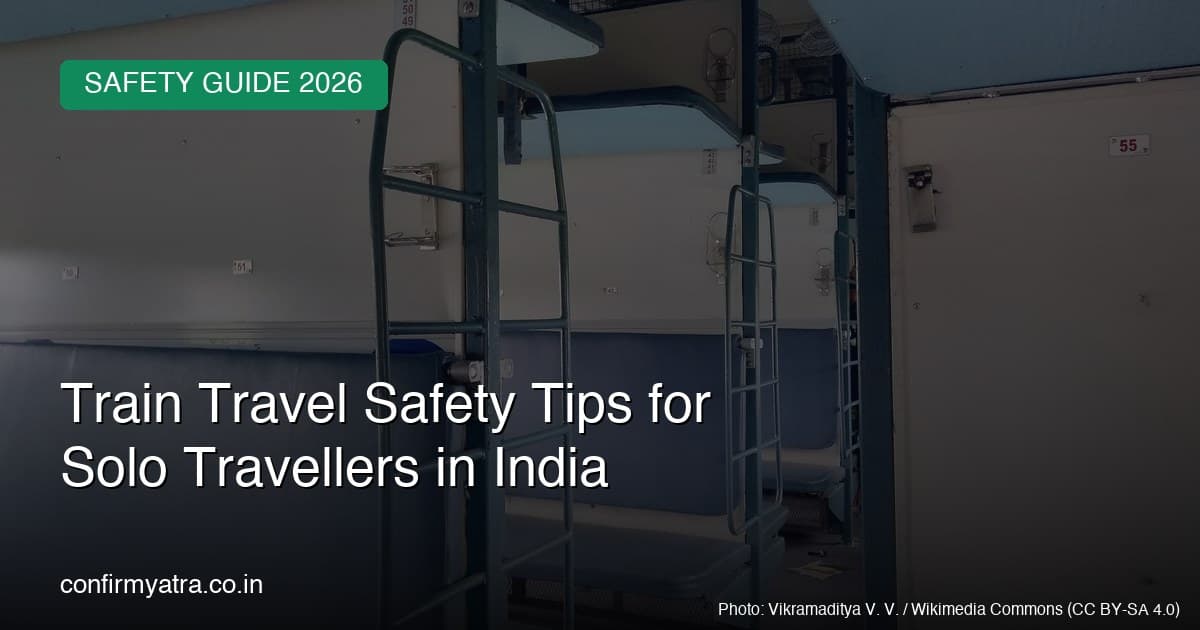
- Pick the right class and berth. For solo and especially first-time travellers, reserved AC classes (3AC, 2AC) are calmer and more secure than the unreserved general compartment. If you can, avoid the general coach for long journeys.
- Choose your berth wisely. A lower or middle berth keeps you and your luggage within easy reach and avoids climbing around at night. Our guide on how to get a lower berth explains the quota tricks that help.
- Confirm your ticket is actually confirmed. Never board on a fully waitlisted ticket — it is not valid and it is now a Rs 500 penalty. Check your PNR status before you leave for the station.
- Share your plan. Send a family member or friend your train number, PNR, coach and berth. They can follow your train in real time with the live train running status tool and know roughly where you are through the night.
On the Platform and While Boarding
- Reach early, but stand in the right spot. Use the coach position guide so you are not sprinting down a crowded platform at the last second — rushing is when bags get grabbed and phones get lost.
- Keep valuables close and hands free. Wallet, phone and documents in a zipped inner pocket or a cross-body bag, not a back pocket or an outer flap.
- Be wary of over-eager "helpers." Genuine porters wear a numbered badge. Politely decline strangers who insist on carrying your bag onto the train.
Onboard Train Travel Safety — Your Berth, Bags and the Night
This is where most of your journey happens, so it is where good train travel safety habits matter most.
- Chain and lock your luggage. Carry a small steel chain with a number lock and secure your suitcase to the rings under the lower berth. This one Rs 200 habit prevents the most common train theft — someone quietly lifting a bag at a midnight halt.
- Never accept food or drinks from strangers. This is the single most repeated piece of advice from seasoned travellers, and for good reason: spiked-snack robberies, while uncommon, do happen. A friendly "no thank you, I just ate" is all you need.
- Keep your phone and power bank on you at night, not charging on the far wall where you cannot see them. Sleep with valuables tucked inside your pillow cover or under you.
- Trust your instinct about co-passengers. The vast majority are perfectly ordinary families and workers. If someone makes you uncomfortable, move, speak to the coach attendant, or call the helpline (below) — you never have to just tolerate it.
- Note your exits and the TTE. Know where the coach attendant and Travelling Ticket Examiner are. They are your first point of help onboard.
Solo Female Travellers: A Few Extra Layers
Indian Railways has specific provisions worth knowing about, and they genuinely help.
- Ladies coaches and reserved quota. Many trains have a reserved ladies coach, and there is a ladies quota with lower berths set aside for women — ask for it when booking. Unauthorised men entering women's coaches are regularly penalised by the RPF.
- "Meri Saheli." This is a Railway Protection Force (RPF) initiative dedicated to the safety of women travelling alone. RPF teams note lone women passengers at the originating station and check on them through the journey to the destination. If an RPF officer asks after your wellbeing onboard, that is what this is.
- Sit near families where you can. On overnight journeys, a berth cluster with a family nearby is an easy, natural comfort.
For a broader first-timer overview beyond safety, our complete first-time train travel guide pairs well with this one.
Emergency Help: The Numbers to Save Right Now
Save these before you travel — this is the most important part of train travel safety, and it takes thirty seconds:
| Need | Number / Channel | |
|---|---|---|
| All railway emergencies (security, medical, help) | 139 (24x7, linked to national emergency 112) | |
| Complaints, coach cleanliness, assistance | RailMadad app / portal | |
| National emergency | 112 |
A few notes on using them:
- 139 is your one-stop number. It handles security, medical help, and general assistance around the clock. Program it into your phone now.
- The emergency chain (alarm chain) is for genuine emergencies only — a person in danger, a medical crisis, a child or companion left on the platform. Pulling it without real cause is a punishable offence, so it is not for minor complaints.
- RPF and GRP work the network — the Railway Protection Force on trains and platforms, and the Government Railway Police for law-and-order. A coach attendant or TTE can summon them fast.
Your Quick Train Travel Safety Checklist
Before every solo journey, run through this:
1. Ticket confirmed and PNR checked
2. Train number, coach and berth shared with family
3. 139 and 112 saved in your phone
4. Luggage chain and lock packed
5. Valuables in a zipped inner pocket
6. A charged power bank
7. Lower or middle berth for overnight trips
Do these seven things and you have handled 95% of everything that actually goes wrong. The rest is just enjoying the journey.
Frequently Asked Questions
Is train travel safe for solo female travellers in India?
Yes, for the great majority of journeys it is safe, and Indian Railways runs women-specific measures like ladies coaches, a ladies berth quota, and the RPF "Meri Saheli" initiative that looks out for women travelling alone. Following basic train travel safety habits — a confirmed reserved ticket, locked luggage, not accepting food from strangers, and saving helpline 139 — keeps the risk very low.
What is the railway helpline number for safety in India?
Dial 139 for all railway emergencies including security and medical help — it operates 24x7 and is integrated with the national emergency number 112. For complaints and assistance you can also use the RailMadad app or portal.
What should I do if I feel unsafe on a train?
Move to a busier part of the coach, alert the coach attendant or TTE, and call 139 immediately. For a serious threat, the RPF can be alerted to meet your train at the next station. Use the emergency alarm chain only for a genuine emergency.
Which berth is safest for solo travellers?
A lower or middle berth is generally best for solo travellers — your luggage stays within reach, you avoid climbing at night, and you are closer to the aisle and staff. Women can request the ladies quota, which reserves lower berths.
How do I protect my luggage on an overnight train?
Carry a small steel chain and number lock, and secure your suitcase to the rings under the lower berth. Keep your phone, wallet and documents on your person — ideally tucked under your pillow while sleeping — rather than on an open shelf.
Is it safe to travel in the general (unreserved) coach alone?
The general coach is heavily crowded and offers no assigned seat, which makes it harder to keep track of your belongings. For solo and first-time travellers, a reserved AC class (3AC or 2AC) is a safer, calmer choice for long journeys.
Plan a safe journey with ConfirmYatra — confirm your PNR status, track your train live so family knows where you are, and search the right trains before you travel.
Plan your journey with ConfirmYatra
Free real-time tools for Indian Railways travellers.